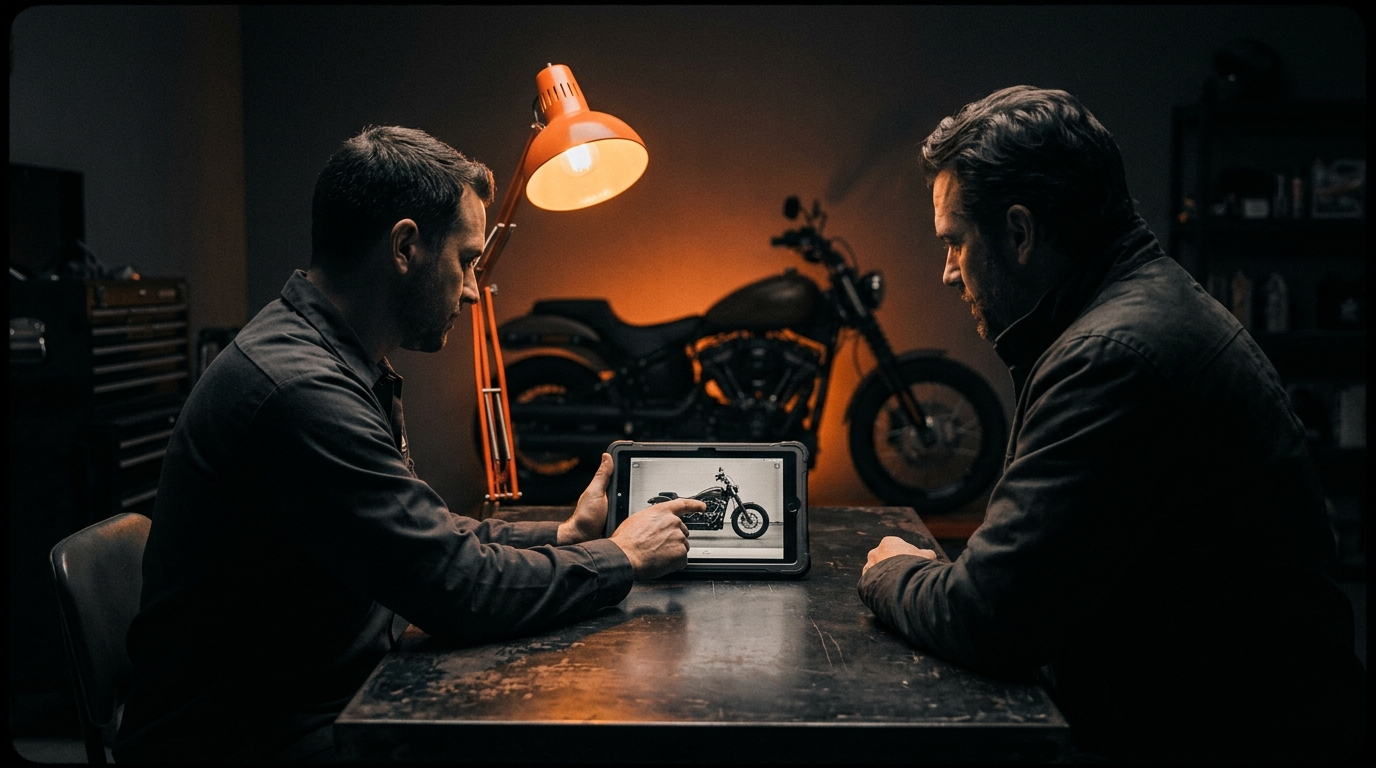
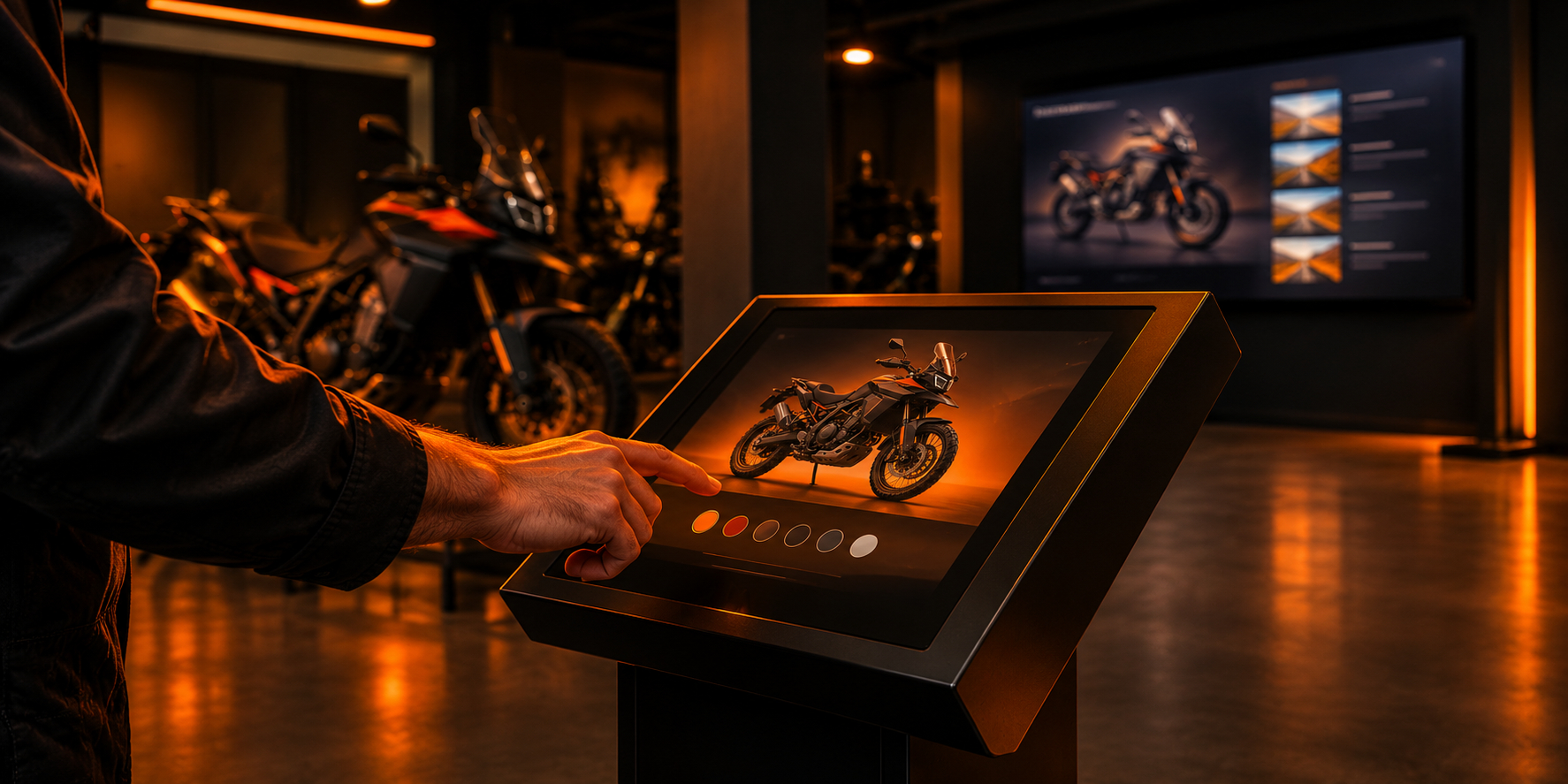
Customer configuring a motorcycle on a Build-A-Bike touchscreen in a dealership showroom

Build-A-Bike in Your Showroom.

Customers walk up to a touchscreen, pick a model, configure colors, exhaust, luggage, and accessories, and see a live build with a price. It runs on your website today and on Raspberry Pi in your showroom tomorrow, managed from one central CMS.

Build a Bike

Get customers off their phones and onto your technology

The Configurator

A customer selects a model, then explores colors, trim, exhaust, seats, luggage, graphics, and apparel. The screen shows the live build, a price estimate, and a QR code to save or share the configuration. The build follows the customer from the kiosk to your sales desk.

The Signage

Every screen in the store runs on a Raspberry Pi player. One dealership runs fifteen displays off this; an OEM network could run thousands. Promotions, financing offers, new-model launches, and service campaigns go out from one dashboard, scheduled per store.

Internet Drops

The kiosk keeps working when the internet drops, because content caches locally on the Pi. Devices report heartbeats, storage, and screen status, so you know what is playing and what is offline. Leads from kiosk route to the right salesperson.

Service-lane intelligence

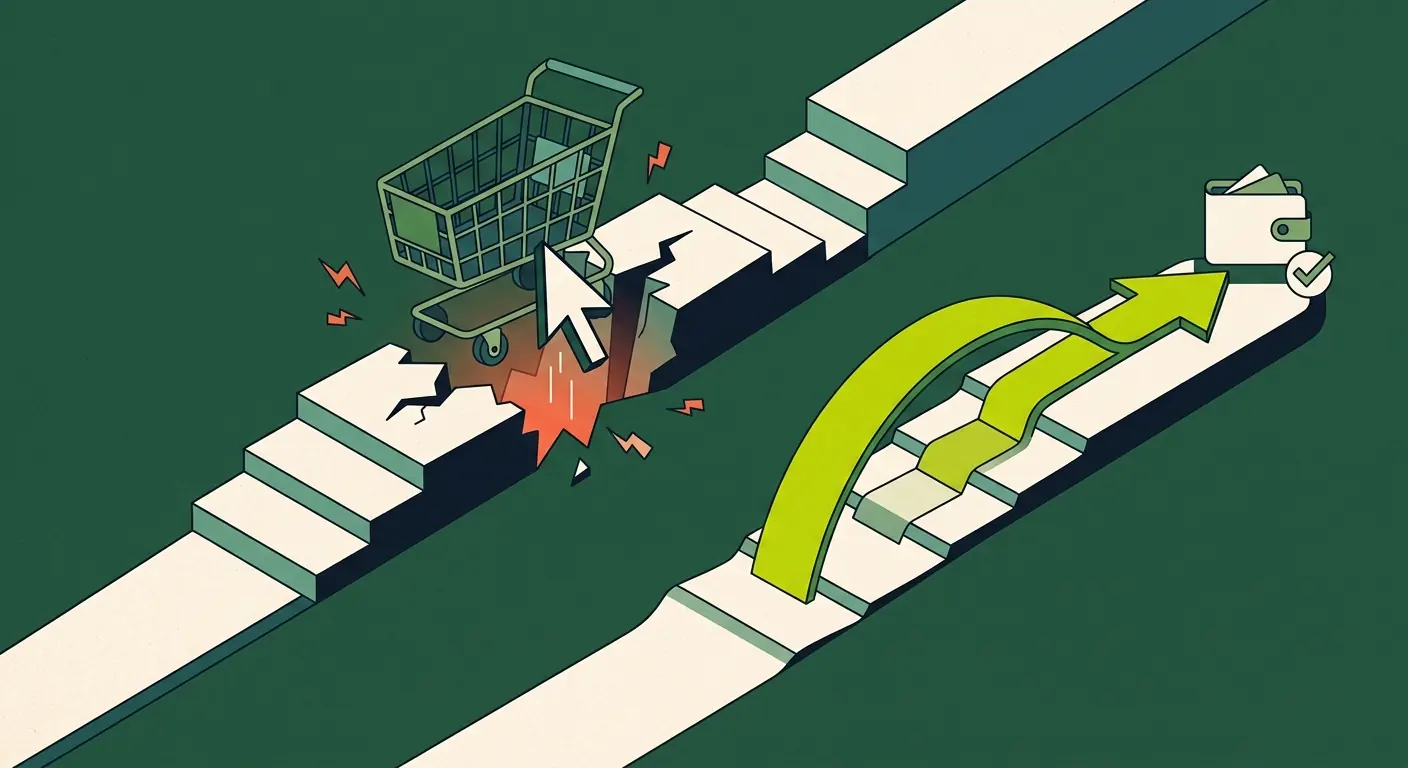
Find the money hiding inside your repair orders

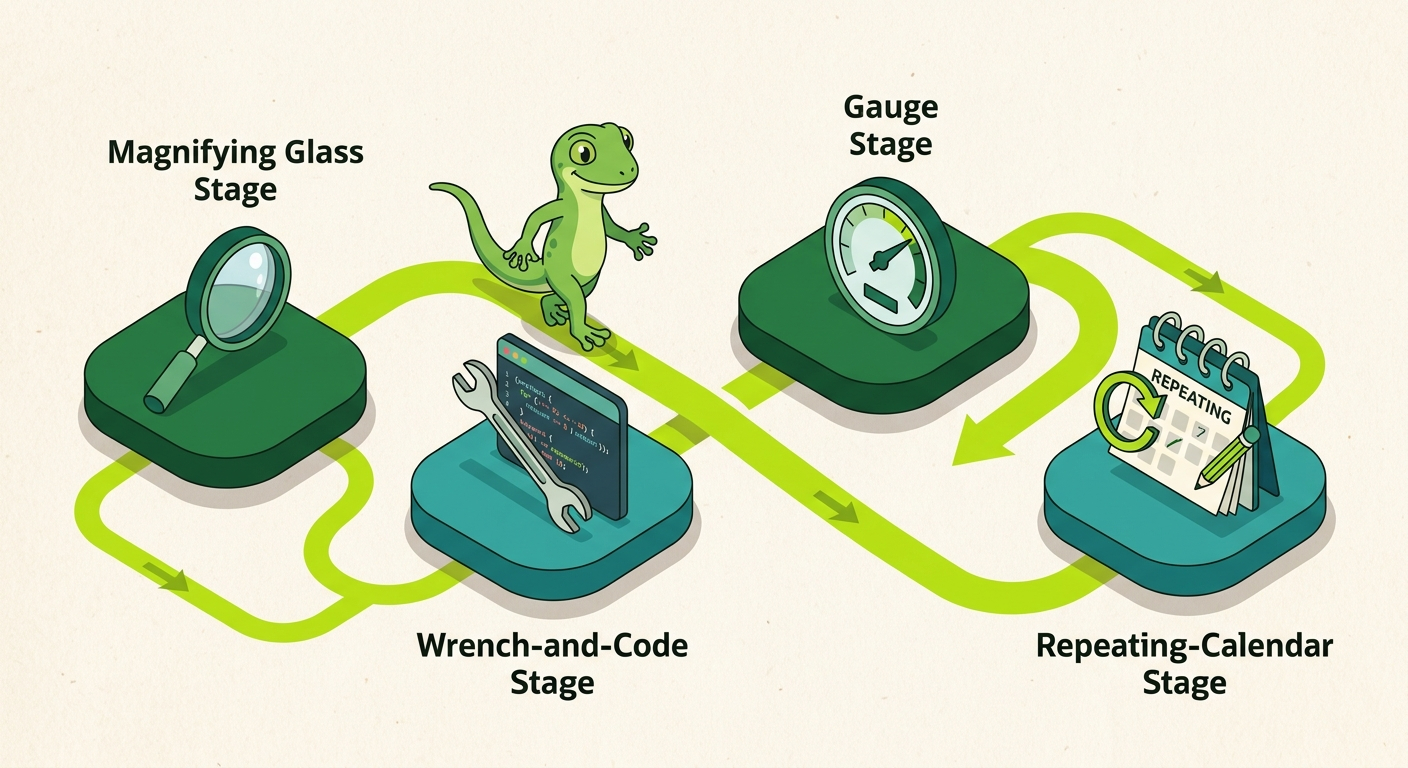
Start with an audit, not software Import 90 to 120 days of repair orders and get a report, by VIN and customer name, of declined repairs nobody followed up and repair-versus-replace conversations that should have happened. Each finding carries a dollar figure.
Then the engine Every morning the service manager gets the handful of customers who need attention today, with the numbers pre-computed: estimate, 18-month repair spend, equity, and inventory match. The recommendation is one of five actions: repair, repair and retain, replace, acquire, or recover later.
What it reads Your existing DMS export or RO spreadsheet, your inventory feed, and a valuation source. It connects four systems that don't talk to each other, in the short window an advisor has with a customer holding a big estimate. It sits beside your DMS. Work orders, invoicing, and accounting stay where they are.
One example RO #4821, a 2019 Harley Street Glide: customer declined $2,850 in recommended work, no follow-up recorded. Estimated recoverable opportunity, $1,100 to $2,400 across the repair or trade path. It is the difference between a lost customer and a retained repair, a trade, and a next-bike sale.
How the repair-versus-replace decision works →
Rider first website

Riders should not need to know the model before they can get help choosing it

✓ Two ways in: browse if you know the bike, or describe the ride if you know what it needs to do
✓ Commute, terrain, passenger, experience, and budget become decision requirements
✓ Every recommendation includes why it fits and where it falls short
✓ The site remembers the journey before the rider becomes a lead
✓ Your sales team receives a structured rider brief instead of a vague inquiry
✓ Sometimes the honest answer is that none of the available bikes fit, and the site says so

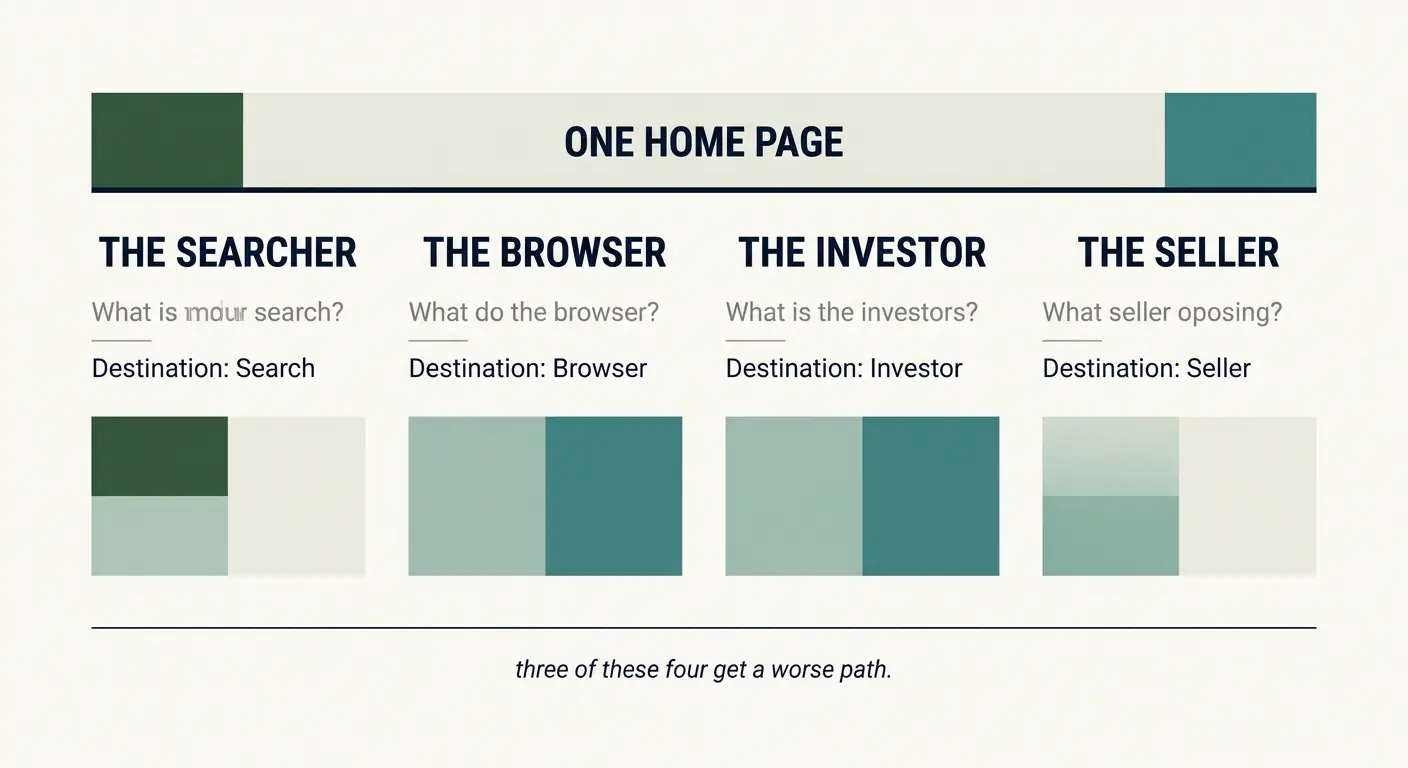
Most dealership websites begin with inventory and ask the buyer to become an expert in makes, models, years, and trims. This one begins with the rider's real situation and narrows the field before showing a single motorcycle.

Motorcycle dealership platform showing a rider-first recommendation, a Build-A-Bike configuration on a touchscreen, shopper memory, and a service-lane opportunity worklist
THE RIDER BRIEF

How riders actually choose motorcycles, what dealership technology gets wrong, and how we'd fix it. One email at a time.

Who we build for

Riders and the motorcycle dealerships who serve them

Customer using an interactive Build-A-Bike touchscreen in a motorcycle dealership showroom

Showrooms

Turn the floor into an interactive purchase journey. Build-A-Bike on a touchscreen, complementary signage throughout the store, and one CMS that manages every display from anywhere.

Motorcycle service advisor reviewing repair history, motorcycle equity, and inventory opportunities

Service departments

Declined repairs that stay alive instead of vanishing, repair history that compounds on every VIN, and a worklist of who to talk to today, with the dollars already computed.

Rider using a motorcycle decision platform to compare commuter, touring, and adventure bikes

Sales teams

A rider brief with the use case, budget, shortlist, and objections already written down. Less repetitive use-case questioning, faster movement from inquiry to a viable motorcycle.

The build standard

What every dealership experience is held to

0.5
SECOND LCP TARGET

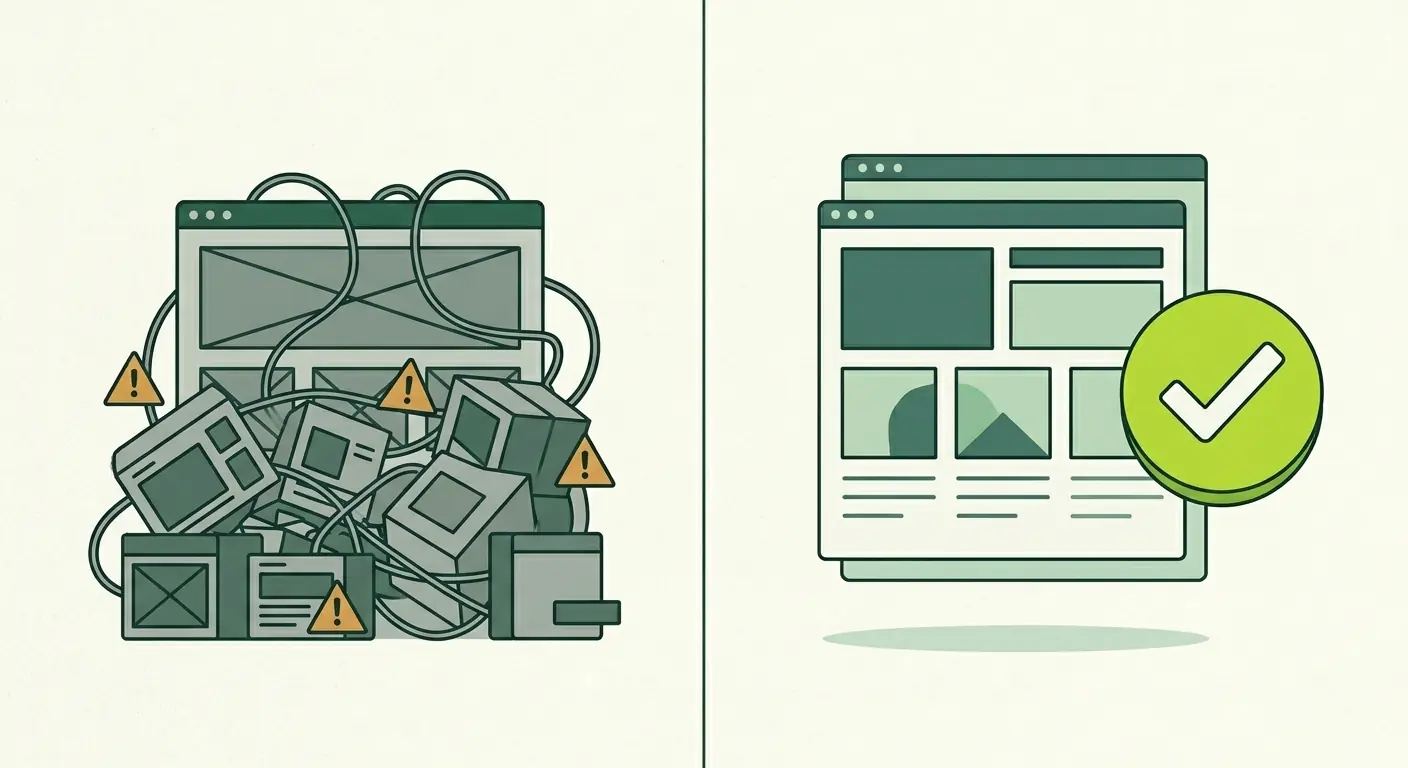
WCAG 2.2 AA accessibility by design, W3C-valid code with zero errors, and a 0.5-second LCP target on mobile. Semantic HTML, real keyboard and screen-reader testing, and performance built for actual mobile connections and in-store touchscreens, not just a Lighthouse score. One honest limit: hitting 0.5 seconds on a live site depends on image discipline from whoever uploads content, so the CMS enforces file-size limits and format checks rather than trusting anyone to remember. If it does not meet the standard, it does not ship.

Written down, so you can hold us to it.

Developer building a custom Django motorcycle dealership platform with a Raspberry Pi Build-A-Bike kiosk, shopper memory, and service-lane intelligence
How we build

Custom engineering, built for the showroom and the web

  • Custom hand-written HTML/CSS frontend, no page builders, no template sameness
  • Secure, fast Django and Python backends, APIs, CMS, authentication, and lead capture
  • Build-A-Bike configurator for web and Raspberry Pi touchscreen kiosks
  • Remote signage management, multi-zone layouts, scheduling, and offline content caching
  • Rider memory, structured rider briefs, inventory matching, and dealer lead handoff
  • Service-lane intelligence for repair, retention, replacement, and acquisition opportunities
See the platform standard →
Common questions

Questions dealers ask us

Does Build-A-Bike work with Raspberry Pi?

Yes. It runs on your website today and on Raspberry Pi-powered touchscreens in the showroom. A central Django CMS pushes content, schedules, and layouts to dealer screens across the country or the world, with device monitoring and offline caching so the kiosk keeps working if the internet drops.

What does the service engine do for the service department?

It turns repair-order data into dealership opportunity. It identifies declined work, tracks repair history and spend trajectory, estimates equity and value context, and recommends whether the best next action is to repair the bike, retain the customer, replace it, acquire it, or follow up later. The paid revenue-recovery audit is the entry point: we review 90 to 120 days of your repair orders and show you the dollars before you buy any software.

How is the website different from a normal dealership website?

Most dealership websites begin with inventory and ask the buyer to become an expert in makes, models, years, and trims. This platform begins with the rider's real situation: commute, experience, terrain, passengers, budget, and priorities. It offers two ways in: browse if you know the bike, or start with a structured ride brief if you know what it needs to do. Then it explains suitable paths, exposes tradeoffs, and remembers the journey before the rider becomes a lead.

Two ways to start

Put the kiosk in your showroom.
Or find the money in your service lane.

Dealers: book the Build-A-Bike demo and see the kiosk, the signage CMS, and the rider-first website working together. If service leakage is the louder problem, start with the revenue-recovery audit instead. It costs $1,000 to $1,500, and if we cannot find at least $3,000 to $5,000 of recoverable exposure in your repair orders, you pay nothing.

Book a dealer demo Start your ride brief
Email us with 'Dealer Demo' in the subject line and we'll send it the same day.
Motorcycle dealership platform report showing a Build-A-Bike configuration on a Raspberry Pi touchscreen, rider briefs, and service-lane revenue opportunities